
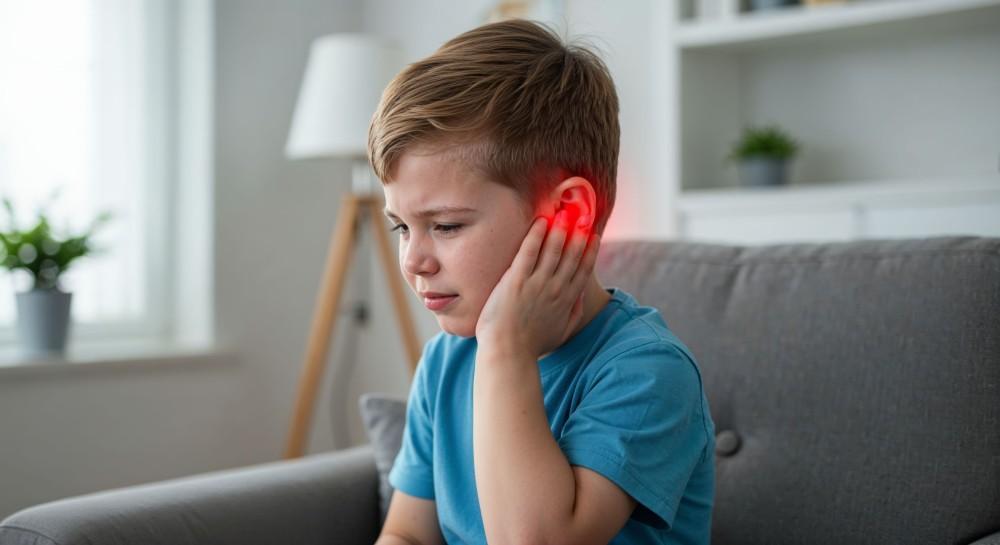
If your child is getting an ear infection every few weeks or months, you might ask yourself, “Why does this keep happening?” Ear infections are very common in childhood, particularly in younger children. Most episodes resolve with the right care, but recurrent episodes can be frustrating for both kids and their parents. Even more important is the fact that ear infections can sometimes affect hearing or lead to persistent fluid behind the eardrum. So’ when should recurrent ear infections be a reason to see a Pediatric ENT?
Why Are Ear Infections So Common in Children?
The shape and location of children’s Eustachian tubes can facilitate ear infections. These small passages connect the middle ear with the back of the nose and help to drain fluid and equalize pressure. In young children they are narrower and more horizontal allowing fluid to get trapped behind the eardrum.
An ear infection, medically called otitis media, often develops after a cold or another upper respiratory infection. When the Eustachian tube becomes blocked, fluid can build up in the middle ear, creating an environment where infection can develop.
What Does “Recurrent” Ear Infection Mean?
Having one or two ear infections does not necessarily mean that a child has a recurring problem. Doctors generally say that ear infections are recurrent when a child has had three or more episodes in six months or four or more episodes in 12 months, with at least one episode in the past six months.
Infections are important, but they’re not the only thing that doctors look at. Your child's age, hearing, speech and language development, the presence of fluid behind the eardrum and how well previous infections responded to treatment also matter.
What Are the Signs of an Ear Infection?
Older children may say their ear hurts or feels blocked. Children may not be able to explain what’s wrong. Instead they may be unusually irritable, cry more than usual, pull or rub their ears, have trouble sleeping or develop a fever.
Sometimes the clues are less obvious. You may notice that your child is asking you to repeat yourself, turning up the television volume or not responding when called. These changes can happen when fluid stays behind the eardrum and affects hearing.
Can Recurrent Ear Infections Affect Hearing?
Repeated ear infections is one of the main reasons this deserves attention. Sometimes when the pain and fever have passed, even when the infection is gone, fluid can remain in the middle ear. This condition is called otitis media with effusion and may not indicate an active infection but can temporarily impact hearing.
Persistent hearing difficulty can impact everyday interactions and learning for a young child who is learning new words and developing communication skills. If there appears to be a change in hearing after several ear infections, an evaluation by an ENT and hearing testing may be recommended.
Does Every Ear Infection Need Antibiotics?
Not necessarily. Some mild middle ear infections improve without antibiotics, and the decision depends on factors such as the child's age, symptoms, severity and whether one or both ears are affected. When antibiotics are appropriate, the choice and duration should be guided by a healthcare professional.
Using antibiotics repeatedly without medical guidance is not recommended. Current pediatric recommendations also do not support routine preventive antibiotic use simply to reduce recurrent ear infections.
When Should You See a Pediatric ENT?
If your child is experiencing repeated ear infections, persistent hearing difficulties, speech or language concerns, ear discharge, ongoing ear pain or fluid that does not clear, it is a good idea to consult a Pediatric ENT specialist.
For some children with recurrent infections or persistent middle-ear fluid, an ENT specialist may discuss whether further monitoring, hearing evaluation or procedures such as tympanostomy tube placement could be appropriate. Treatment is individualised rather than based on the number of infections alone.
What Can Parents Do to Reduce the Risk?
Not every ear infection can be prevented, but some everyday measures can help reduce risk. Keeping your child's vaccinations up to date, avoiding exposure to cigarette smoke and maintaining good hand hygiene can help reduce respiratory infections that may lead to ear infections. Breastfeeding, when possible, is also associated with a lower risk of some childhood infections.
Most importantly, don't ignore repeated episodes. Keeping a record of when your child's ear infections occur and what treatment was given can be very helpful when discussing the problem with an ENT specialist.
Conclusion
Recurrent ear infections are common in childhood, but that does not mean parents have to simply keep waiting for the next episode. Frequent infections, persistent fluid or changes in hearing deserve a closer look, particularly in younger children.
The goal of treatment is not just to get rid of the current ear infection. It is also to protect your child’s hearing, communication and quality of life. If ear infections are recurrent, a timely evaluation by a Pediatric ENT can help determine the reason for the infections and the need for any further treatment for your child.
Why Choose Ankura?
Ankura Hospitals' Pediatric ENT services focus specifically on the ear, nose and throat health of infants, children and adolescents. The team provides child-friendly evaluation and management for concerns ranging from recurrent ear infections and hearing difficulties to other pediatric ENT conditions. With access to specialised pediatric services and a multidisciplinary approach, Ankura aims to provide comprehensive care while making the healthcare experience as comfortable as possible for children and their families.