
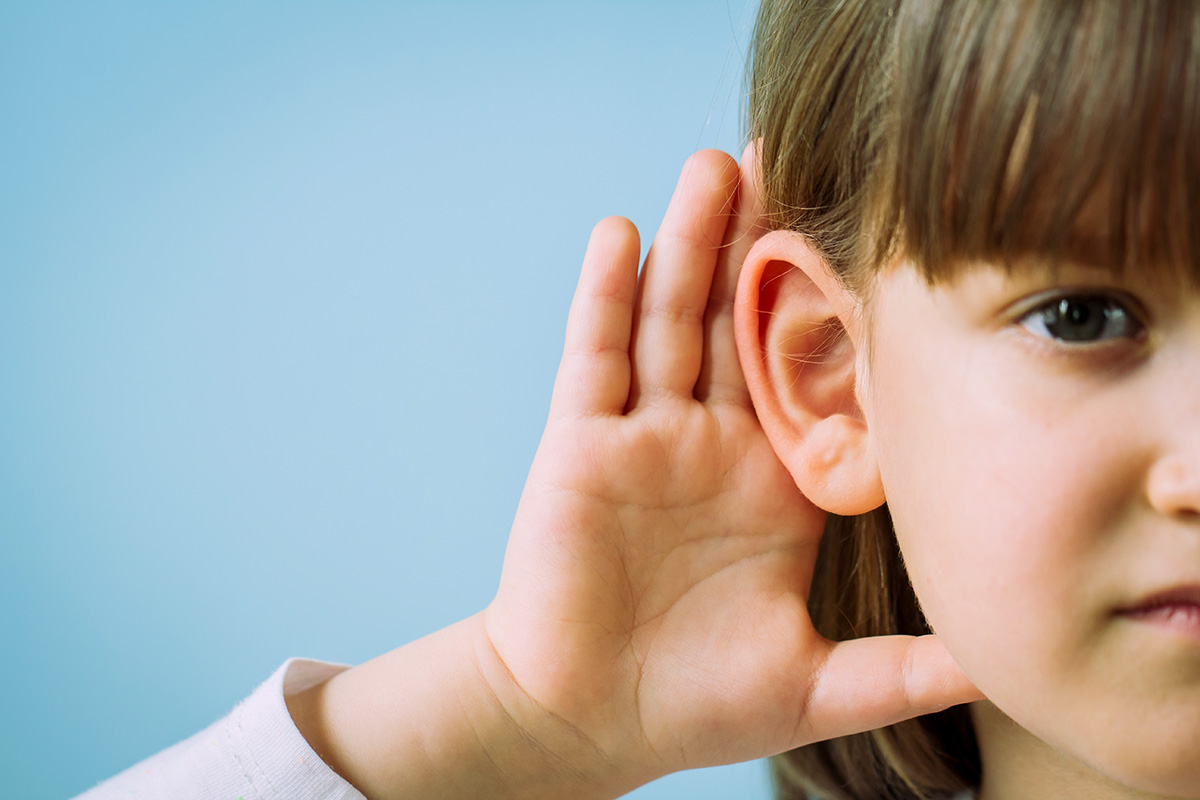
A child may hear a door slam, a favourite cartoon song or the sound of a toy and appear completely normal. Yet, sometimes, a child may have difficulty hearing certain sounds, following conversations or understanding speech clearly—and parents may not notice it immediately.
Hearing problems in children do not always look like complete deafness. A child may have mild, partial, one-sided or fluctuating hearing loss and still respond to some sounds. This is one reason hearing difficulties can sometimes be mistaken for inattentiveness, delayed speech, behavioural issues or simply “not listening.”
Hearing plays an important role in speech and language development, learning and social interaction. Early identification gives children a better opportunity to receive the appropriate support at the right time.
So, how can parents tell whether their child is hearing properly?
Why Hearing Matters in Early Childhood
Children learn a great deal by listening.
From infancy, babies listen to voices, sounds and the environment around them. As they grow, hearing helps them understand words, imitate sounds, develop speech and communicate with others.
Hearing difficulties can affect more than just the ability to hear. If significant hearing loss remains unrecognised, it can interfere with communication, language development, learning and social interaction.
This is why parents should pay attention not only to whether their child reacts to loud sounds, but also to how consistently the child responds to speech and everyday sounds.
Early Signs of Hearing Loss Parents May Miss
Hearing loss can present differently depending on the child's age and the degree or type of hearing difficulty.
Some children may show obvious signs, while others may compensate remarkably well.
Here are some signs parents should watch for.
1. Your Baby Does Not Startle at Loud Sounds
Young babies commonly respond to sudden loud noises.
If your baby rarely reacts to loud sounds or does not appear to notice them, it is worth discussing this with your pediatrician.
However, one isolated observation does not confirm hearing loss. Babies respond differently depending on whether they are awake, asleep, hungry or distracted.
2. Your Baby Does Not Turn Towards Sounds
As babies grow, they gradually begin to notice where sounds are coming from.
If your baby does not seem to turn towards voices or sounds as expected, particularly as they get older, hearing should be assessed.
The CDC notes that not turning toward the source of sound after around 6 months can be a sign that warrants evaluation.
3. Your Child Responds When They See You—But Not When You Call
This can be particularly easy to overlook.
For example, your child may immediately look at you when you enter the room but may not respond when you call their name from behind.
Parents may assume the child is ignoring them or not paying attention.
Sometimes, however, the child may simply not have heard the voice clearly.
4. Speech Seems Delayed
Every child develops at their own pace, but hearing is an important part of learning spoken language.
If your child is not developing speech as expected, hearing should be considered as one possible factor.
A child does not necessarily need to have severe hearing loss for speech and language development to be affected.
5. Your Child's Speech Is Difficult to Understand
Does your child speak, but some sounds or words are consistently unclear?
Speech that is difficult to understand for the child's age can have several possible causes. Hearing difficulty is one of them.
A hearing assessment can help determine whether the child is hearing speech sounds clearly enough to support language development.
6. Your Child Frequently Says “Huh?” or “What?”
Occasionally asking someone to repeat themselves is normal.
But if a child frequently says:
- “What?”
- “Huh?”
- “Say again.”
or regularly asks people to repeat themselves, it may be worth checking their hearing.
7. The TV or Mobile Volume Is Always Very High
If your child consistently turns the television, tablet or other audio device up louder than other family members prefer, don't automatically assume they simply enjoy loud sounds.
Repeatedly needing higher volume can sometimes be a sign of hearing difficulty.
8. Your Child Has Difficulty Following Instructions
A child who frequently seems unable to follow simple instructions may be perceived as inattentive or disobedient.
But consider the situation carefully.
Does your child follow instructions when they can see you?
Do they struggle more when you speak from another room?
Do they have difficulty when there is background noise?
If so, hearing should be considered.
9. Your Child Understands You Better When Looking at Your Face
Some children with hearing difficulties naturally rely more on facial expressions and visual cues.
You may notice that your child responds better when they can see your face but struggles when you speak from behind or from another room.
This is an important observation to mention to your pediatrician.
10. Your Child Seems to Hear Some Sounds but Not Others
Hearing loss does not always mean that a child hears nothing.
Depending on the type and degree of hearing difficulty, a child may hear certain sounds but struggle with softer sounds, speech or particular frequencies.
This can make hearing problems surprisingly difficult to recognise at home.
A Child Can Pass a Newborn Hearing Screening and Still Develop Hearing Problems Later
This is an important point for parents.
A newborn hearing screening is extremely valuable, but passing the screening does not mean that a child can never develop hearing difficulties later.
Some hearing loss can develop after birth or may become apparent as a child grows.
The CDC specifically advises parents to continue watching for signs of hearing loss even when a child has passed an earlier hearing screening.
That is why developmental milestones and parental observations remain important.
What Can Cause Hearing Loss in Children?
Hearing loss can have different causes.
Depending on the child's age and medical history, possible factors may include:
- Genetic or inherited conditions
- Problems around birth
- Certain infections
- Repeated or persistent middle-ear problems
- Ear abnormalities
- Certain medications that can affect hearing
- Head injuries
- Exposure to very loud sounds
- Other medical or neurological conditions
Not every hearing problem is permanent.
For example, some conditions involving the middle ear may be treatable. Other types of hearing loss may require hearing technology, rehabilitation or other long-term support.
The appropriate treatment depends on the cause, type and degree of hearing loss.
Could Frequent Ear Infections Affect My Child's Hearing?
Some children experience repeated ear infections or fluid behind the eardrum.
When this happens, hearing can sometimes become temporarily reduced or muffled.
Parents may notice that their child:
- Says “what?” more often
- Turns the TV volume up
- Has difficulty hearing in a classroom
- Appears less responsive
- Has speech or communication concerns
If ear problems are frequent or hearing appears reduced, a medical evaluation is important.
The goal is not simply to treat the ear infection but also to make sure the child is hearing adequately during important stages of development.
When Should Parents Get a Child's Hearing Tested?
You do not have to wait until a child develops a major speech problem.
Consider discussing a hearing assessment with your child's doctor if:
- You are concerned that your baby does not respond to sounds
- Your child does not turn toward sounds as expected
- Speech development appears delayed
- Your child's speech is unclear
- Your child frequently asks people to repeat themselves
- Your child struggles to follow spoken instructions
- The TV or other devices are consistently played at a high volume
- Your child seems to hear better in some situations than others
- There is a history of significant ear problems
- A teacher or caregiver has raised concerns about hearing
- You simply feel that your child's hearing may not be normal
If a parent suspects hearing loss, it is better to arrange an assessment rather than wait for the problem to become more obvious. The CDC recommends prompt hearing screening and further evaluation when concerns arise.
What Happens During a Child's Hearing Assessment?
Parents sometimes postpone hearing tests because they imagine that their child will have to sit still and answer complicated questions.
In reality, hearing assessment is adapted to the child's age and development.
Depending on the child's age, an audiology evaluation may include different tests.
For Babies
Tests such as Otoacoustic Emissions (OAE) and Auditory Brainstem Response (ABR) may be used.
ABR testing measures how the hearing system and brain respond to sound and can be performed while a baby is sleeping.
For Toddlers and Young Children
Age-appropriate behavioural hearing tests can be used.
The child may respond to sounds through a simple game or activity rather than a traditional adult-style hearing test.
For Older Children
Children who can participate reliably may undergo hearing tests in which they respond when they hear different sounds.
The audiologist may also consider the child's medical history, speech and language development, previous ear infections and other relevant factors.
Does Hearing Loss Always Mean My Child Will Need a Hearing Aid?
No.
Treatment depends entirely on the cause and degree of hearing loss.
Some children may have a temporary hearing problem caused by a treatable ear condition.
Others may benefit from hearing aids, cochlear implants, assistive listening technology, speech and language support or other rehabilitation services.
The important first step is identifying what type of hearing problem the child has and why it is happening.
WHO emphasises that early identification followed by appropriate intervention can help reduce the developmental, educational and social impact of childhood hearing loss.
Why Early Detection Makes a Difference
The first years of life are an important period for communication and language development.
When significant hearing loss is identified early, children can receive appropriate support sooner.
This may include medical treatment, hearing technology, communication support, speech and language intervention or educational assistance depending on the child's individual needs.
The CDC highlights the 1-3-6 early hearing detection and intervention benchmarks: screening by 1 month, diagnostic evaluation by 3 months when screening is not passed, and early intervention by 6 months when hearing loss is confirmed.
These benchmarks are useful reminders of why timely evaluation matters.
How Parents Can Protect Their Child's Hearing
Parents can also take simple steps to support healthy hearing.
Protect Children From Excessive Noise
Repeated exposure to very loud sounds can damage hearing.
Be particularly careful with:
- Very loud toys
- Loudspeakers
- Firecrackers
- Headphones at excessive volume
- Prolonged exposure to loud music
Encourage safe listening habits as children grow.
Keep Vaccinations Up to Date
Vaccination helps protect children against infections that can contribute to hearing complications.
WHO identifies immunisation, good maternal and childcare practices, management of ear conditions and safe listening as important components of preventing avoidable hearing loss.
Do Not Ignore Repeated Ear Problems
If your child repeatedly complains of ear pain, has ear discharge or experiences frequent ear infections, seek medical advice rather than repeatedly treating symptoms at home.
Pay Attention to Development
Parents know their children better than anyone.
If something about your child's hearing, speech or communication does not seem right, bring it up with your pediatrician.
You do not need to wait until everyone else notices the problem.