Autism Spectrum Disorders: The Crucial Role of Early Support in Child Development
Autism affects how a child communicates, learns, and connects with others. Curious about the signs, support options, and positive outcomes? Read on to find out.

Autism spectrum disorder (ASD), also known as autism, is a complex neurodevelopmental disorder that accounts for a diverse group of conditions related to brain development involving continuous challenges with social communication, repetitive behavior, and restricted interests, affecting how people interact with others, learn, communicate, and behave.
Generally, this condition occurs in the first two years of life and is considered a lifelong condition; however, it can be diagnosed at any age.
Early signs of autism
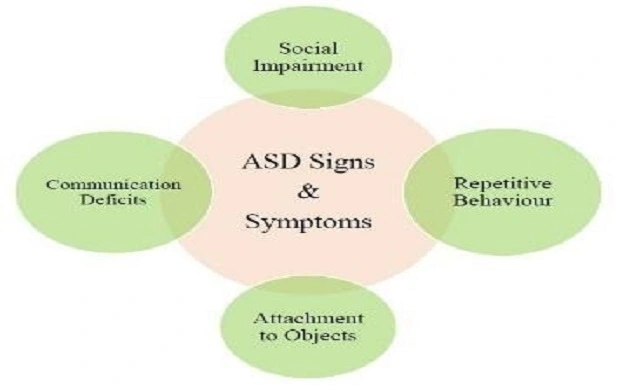
Social communication deficits:
- Avoids eye contact
- Prefers playing alone
- Don’t respond to their name
- Difficulty making friends or keeping them
- Decreased share of interests with others
- Stilted or scripted speech
Restricted interests and repetitive behaviours include:
- Difficulty using and interpreting body language
- Get attached to unusual objects
- Won’t eat food of certain textures
- Repeats words and movements
- Inflexibility of behaviour, extreme difficulty coping with change
- Difficulty moving from one task to another
Autism causes:
Experts have not found any exact reason for autism. It is likely a combination of genetics and environmental factors or prenatal events related to pregnancy, labour, and delivery, including:
- Becoming pregnant over age 35
- Giving birth early
- Bleeding during pregnancy
- Gestational diabetes
- Reduced oxygen to the foetus during delivery or pregnancy
- Smaller than expected fetal size (intrauterine growth restriction)
Early diagnosis of autism
Early diagnosis can help:
- In creating routines
- In changing developmental tactics
- In improving readiness for school
- In enhancing familial support
- To overcome challenges
How early can autism can be diagnosed?
According to the Centers for Disease Control and Prevention (CDC), a healthcare professional can detect autism as early as 2 years, although they may detect it as early as 18 months, which can be considered reliable.
However, many kids are not diagnosed until later in childhood or even adolescence, which can delay access to necessary early interventions.
Studies show that kids diagnosed with autism from age 2 to 4 often lack age-appropriate play and social skills, have slow speech development, and avoid eye contact. With early diagnosis, children have optimal outcomes.
Therapies and interventions
Autism therapies and interventions aim to improve communication, behavior, social skills, and daily living skills. There are many different therapies available to support kids with autism. These therapies help the child manage any challenges they face and build strategies to deal with them. Several therapies include:
- Social skills training: To improve the ability of kids to navigate social situations
- Applied behavioural analysis: Creates a structured behavioural plan to improve their adaptive skills and decrease inappropriate behavior
- Speech and language therapy: To improve the child’s speech patterns and understanding of language
- Occupational therapy: To address adaptive skills deficits with activities of daily living, as well as issues with handwriting
- Special education services: These include a range of services provided by schools to address language, social skills, and other needs.
- Parent management training: This is the training for parents, which can help them learn how to respond to problematic behavior and how to encourage the appropriate behavior of an autistic child.
- Treating co-occurring conditions: Kids with autism are more likely to experience anxiety, depression, intellectual disability, insomnia, and ADHD than patients without autism.
- Medications: A healthcare professional can evaluate for other mental health conditions and prescribe medications if appropriate.
Family and community support
Family and community support are really important for kids with autism, providing a foundation for their development, social skills, and overall well-being.
Family support: A diagnosis of ASD is difficult for both your child and you. Raising a child with autism often has unique challenges for families. Families should help their child cope with the unique aspects of their disorder. As part of this, the healthcare team helps the families learn how to support the child:
- Awareness and education: It is important to be aware of ASD, its symptoms, and available therapies to understand the condition your child is suffering from and educate your child.
- Structured environments: Parents should create consistent, structured routines and clear expectations to help the ASD child.
- Parent management training: It is given for parents to train how to respond when their child shows problematic behaviour and how to encourage the appropriate behaviour of an autistic child.
- Positive home environment: Creating a supportive environment around an autistic child fosters their development.
Community support: Community support can come from a variety of sources, such as friends, family, schools, government agencies, and businesses, which plays a major role in helping people with ASD live full and productive lives:
- Education and training
- Social support
- Recreational activities
- Advocacy
Many organizations in India offer support for persons with autism and their families, including:
- AFA – Action for Autism
- IAC – India Autism Center (IAC)
- SCAN – Special Child Assistance Network
- NAYI DISHA
- Tata Power’s Pay Authentication
- VOICE – Voice of Parents for Inclusion, Care & Empowerment of Children with Special Needs
Success stories and outcomes
There are many success stories available in India that demonstrate that with the right therapies, support, and opportunities, individuals with autism in India can achieve significant progress, overcome challenges, and lead fulfilling lives.